Mechanism without dose is marketing. This page gives the mechanism chain behind every line on the MemoHoney panel, in the order it happens in the body, with the printed amount attached to each step.
The direct answer
MemoHoney supplies arginine and citrulline, which feed nitric oxide and relax blood vessel walls; niacin, which supports NAD-dependent energy metabolism; and beta-alanine, a carnosine precursor. It is a circulation and energy formula. The memory claim rests on an indirect perfusion argument, at intakes far below those shown to change perfusion.
First, how memory actually works
Memory is three processes, not one. Encoding happens when you genuinely attend to something. Consolidation happens largely during sleep, particularly slow-wave sleep in the first half of the night. Retrieval depends on cues and on the health of the networks holding the trace.
Anything degrading attention, sleep or cerebrovascular health degrades recall. That is why the strongest interventions in this field are clinical and free rather than commercial: treat hypertension, treat hearing loss, sleep seven hours, exercise aerobically, stay socially and cognitively engaged. A supplement has to fit underneath that, and the honest question is whether it adds anything measurable on top.
The mechanism chain inside MemoHoney
Step 1. Roughly 640 mg of amino acids reaches the gut
Two arginine forms, two citrulline forms and beta-alanine. After salt-form conversion that is about 315 mg free arginine, 140 mg free citrulline and 40 mg beta-alanine.
Step 2. Citrulline survives what destroys arginine
Oral arginine is broken down by arginase in the gut wall and liver. Citrulline passes that first pass intact and converts to arginine in the kidneys — which is why it is the better route, and why its small share here matters.
Step 3. Arginine becomes nitric oxide
Nitric oxide relaxes the smooth muscle lining blood vessels, widening them. This is the pathway behind arginine's use in cardiovascular research, at gram-level intakes.
Step 4. Wider vessels mean better perfusion — in principle
The brain consumes about a fifth of the body's oxygen, so cerebral perfusion genuinely matters for thinking. No trial has shown a few hundred milligrams of arginine changing it.
Step 5. Niacin feeds NAD-dependent energy metabolism
The straightforward part. 7.5 mg NE covers 47% of the Daily Value and supports the enzymes that release energy from food.
Step 6. Beta-alanine does essentially nothing at 40 mg
Its research base is carnosine loading for muscular endurance over weeks at gram-level doses. At 40 mg there is no loading, no tingle, and no relevance to memory.
See the current MemoHoney sale pricing
Bundle pricing on the MemoHoney official website falls from $79 to $49 a bottle. Three and six ship free within the US with five digital guides included.
View MemoHoney PricingOfficial website checkout · 60-day guarantee · confirm the terms before paying
Where the chain breaks
Every link above is real physiology. Three things are missing, and they are not the same size.
- No finished-product trial. This seven-ingredient capsule has never been tested as a product.
- No perfusion evidence at these amounts. No trial shows a few hundred milligrams of arginine changing cerebral blood flow.
- No endpoint evidence at all. No trial shows arginine or citrulline improving memory or recall in healthy adults, at any dose.
The third is the important one and it is routinely buried. Ingredient research is evidence about a compound, at the dose studied, in the population studied, for the endpoint studied. For arginine and citrulline those endpoints are vascular function and exercise performance. Borrowing that evidence to support a memory claim is the manoeuvre this entire category runs on, and it is worth naming plainly.
Why the timeline has to be 8 to 12 weeks
Self-reported cognition is noisy. How sharp you feel on a Tuesday afternoon depends on last night's sleep, today's stress, your caffeine timing and whether you are coming down with something. A single good week means nothing. Trials in this field run 8 to 16 weeks precisely because that is how long a real signal needs to separate from that noise.
Which produces the uncomfortable arithmetic at the centre of this purchase: the guarantee runs 60 days, a twelve-week assessment is 84 days, and the two do not overlap. Diarise your refund decision for day 50.
What would make it work better
- Fix sleep first. Consolidation happens during it and nothing in a capsule substitutes.
- Get blood pressure and hearing checked. Both strongly linked to cognitive trajectory, both treatable.
- Move most days. Aerobic exercise is the best-evidenced intervention for cerebral blood flow — the exact endpoint this formula aims at, at a dose that works.
- Take it consistently and write the baseline down before capsule one.
See the numbers on the MemoHoney ingredients page, or read what MemoHoney is for the wider context.
Questions people ask about this
How long does MemoHoney take to work?
Plan on 8 to 12 weeks of consistent daily use judged against a written baseline. Note that the 60-day guarantee closes before a 12-week assessment ends, so decide by day 50.
Does MemoHoney increase blood flow to the brain?
That is the mechanism it aims at, but no trial has shown these amounts changing cerebral blood flow. Vascular research on arginine uses 3 to 6 grams daily; this capsule provides roughly 315 mg of free arginine.
Why take MemoHoney before a meal?
Amino acids compete for absorption with a large protein load, so a capsule taken 20 to 30 minutes before eating faces less competition.
Can MemoHoney raise acetylcholine?
No. Acetylcholine is built from choline and there is no choline source anywhere on the panel. Artwork supplied with the product makes this claim; the ingredient list cannot support it.
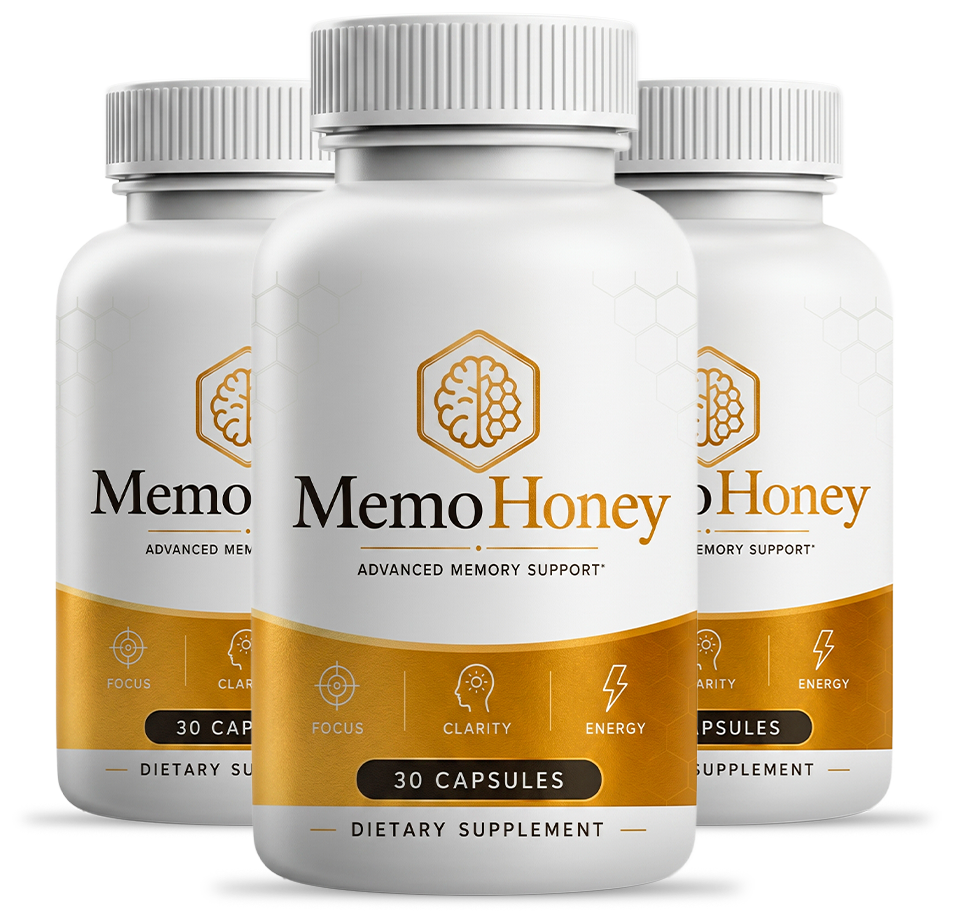
MemoHoney Official Website
per bottle on the 6-bottle pack · free US shipping on 3 and 6
Check Current Price 60-day guarantee · official checkout only